Summary
The way businesses operate is changing faster than ever. Automation is no longer a “future initiative”—it's a competitive requirement. As companies prepare for 2026, they're discovering that digitizing processes before Q1 offers a massive advantage: faster operations, reduced costs, cleaner data, higher scalability, and more resilience in times of uncertainty.
According to the Deloitte Global Automation Survey, 74% of organizations accelerated automation initiatives in 2024-2025-and the pace is expected to rise even more sharply as AI-driven and autonomous workflows become mainstream.
This whitepaper gives you a practical, step-by-step roadmap to prepare for 2026, including:
- What to automate first
- How to build operational readiness
- What capabilities matter most in modern platforms
- A phased roadmap for full cross-functional automation
- A soft but clear introduction to Yoroflow as a no-code automation companion for 2026
Let's see the glimpse below,
- Why 2026 Will Be a Breakout Year for Automation
- Market Trends: The Shift Toward Intelligent, Integrated Operations
- Why Automation Before Q1 2026 Matters
- Key Processes Every Business Must Digitize Before 2026
- What “Digitize Before Q1” Really Means (Practical Checklist)
- Quick Wins vs. Strategic Bets — How to Prioritize
- The Roadmap to a Fully Automated 2026
- 2026 Readiness Scorecard
- Common Pitfalls — And How to Avoid Them
- Choosing the Right Automation Platform in 2026
- The Yoroflow Advantage: Your 2026 Automation Engine
- The Economics of Speed — The ROI of Automating Before Q1
- Autonomous Workflows and the Agentic Future — What 2026+ Will Look Like
- Conclusion: Your First-Mover Advantage Starts Now
Why 2026 Will Be a Breakout Year for Automation
Automation, once a tool for efficiency, is now shaping the very structure of how organizations plan, operate, and grow. The year 2026 marks an inflection point driven by three major forces:
1. AI is becoming operational, not experimental.
Companies are no longer testing AI—they're baking it into workflows.
2. Businesses want resilience and predictability.
Uncertainty in supply chains, labor markets, and regulations has shifted priorities toward stability, automation, and visibility.
3. The move from “task automation” to “workflow automation.”
Automating a task saves minutes. Automating a workflow saves days.
In short, 2026 will reward companies that start early—and penalize those that wait. Automation is now the foundation for customer experience, operational excellence, and digital competitiveness.
"Businesses that automate by Q1 typically see a 35-45% reduction in operational delays within the same year.” — McKinsey Digital Report"
Market Trends: The Shift Toward Intelligent, Integrated Operations
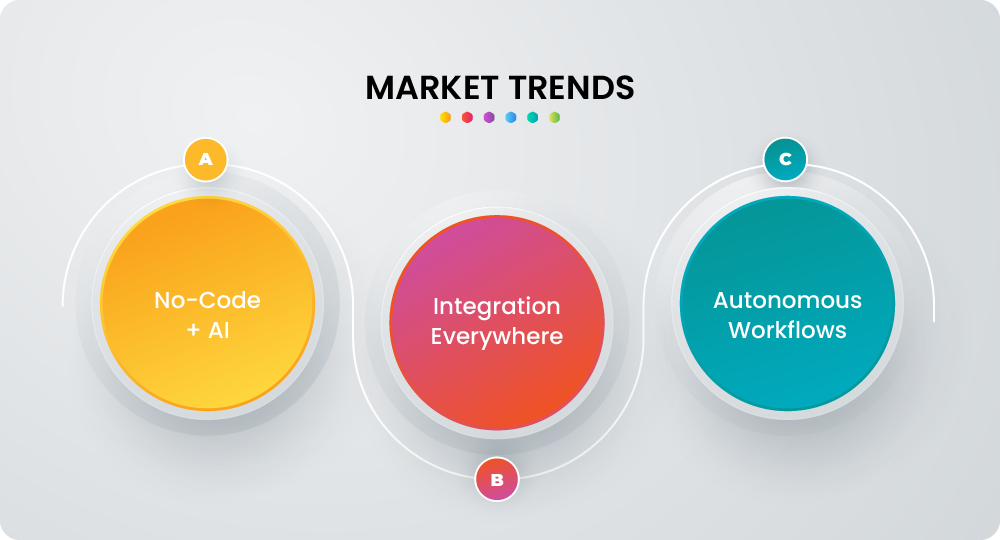
The global market is experiencing a rapid shift from manual operations to intelligent workflow ecosystems. Three major trends define this movement:
Trend #1: No-Code + AI Becomes the Default Standard
Gartner reports that 65% of enterprise applications will be built using low-code/no-code by 2026. The pairing of no-code with AI removes the technical barrier that once slowed automation adoption.
Trend #2: Integrated Systems Replace Silos
Disconnected systems are becoming unacceptable. Businesses want a unified operational view, with everything flowing in real time-HR to Finance, Sales to Operations, Customer Support to Engineering.
Trend #3: Shift From Automation to Autonomy
AI-driven, agentic workflows won't just automate—they'll make decisions, assign tasks, predict issues, and coordinate resolutions.
Companies that prepare now will outperform in both speed and capacity.
" Disconnected systems cause an average 30% loss in productivity every year.” — Forrester Research "
Why Automation Before Q1 2026 Matters
Most businesses underestimate how much Q1 impacts the rest of the year. Automating before Q1 gives organizations a measurable advantage:
Faster Start → Faster Year
When workflows are automated early, teams spend more time executing and less time preparing.
Cost Control Becomes Predictable
Digitization reduces variability, human error, and unnecessary administrative tasks.
Teams Operate With More Clarity
Automated workflows create cleaner handoffs, clearer ownership, and better accountability.
Systems Stay Ready for Market Changes
Mid-year automation delays create bottlenecks; early automation prevents them.
Key Processes Every Business Must Digitize Before 2026
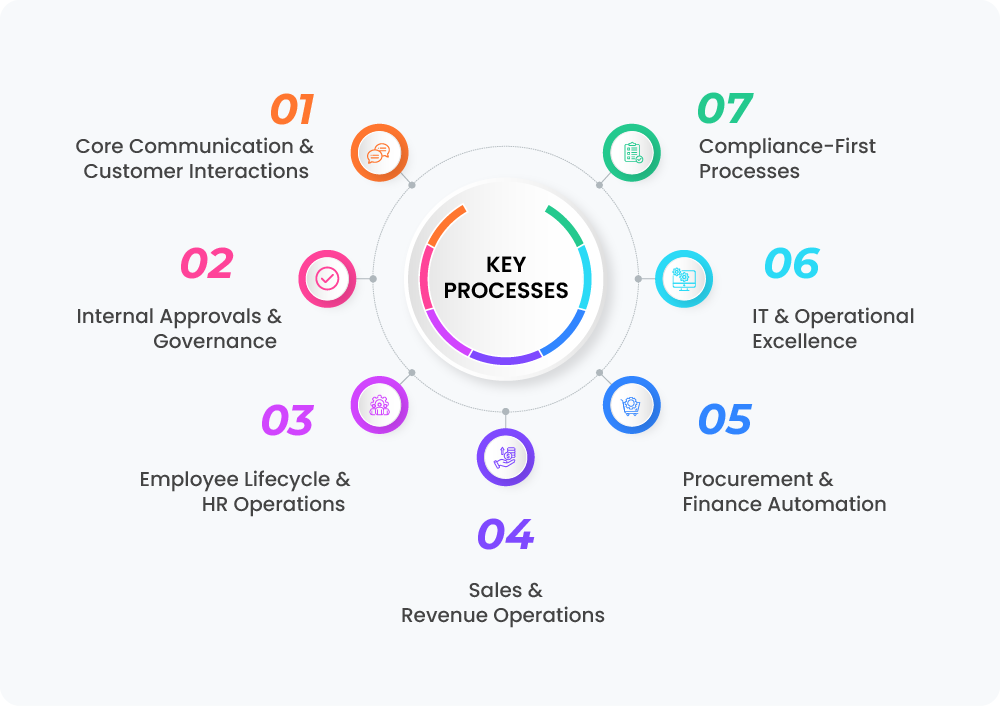
1. Core Communication & Customer Interactions
What to automate: Ticket routing, omnichannel message consolidation (email, chat, social), SLA-based prioritization, response templates with AI assist.
Why it matters: When customer messages are scattered, response time spikes and CSAT drops. Automating routing and standard responses reduce churn and keeps renewal conversations on track.
Risk if ignored: Missed SLAs, longer resolution times, and lower NPS.
Yoroflow fit: Connects channels, auto-tags tickets, uses AI to suggest responses and route urgent issues automatically.
2. Internal Approvals & Governance
What to automate: Multi-stage approvals (purchase requests, contracts), delegated approvals during leave, digital signatures, and version control.
Why it matters: Approvals are the most common Q1 blocker — hiring, budget, and vendor spend all hinge on them.
Risk if ignored: Delayed projects and slow time-to-market.
Yoroflow fit: No-code approval flows that integrate with email, Slack, and calendars; audit trails for compliance.
3. Employee Lifecycle & HR Operations
What to automate: Offer letters, onboarding checklists, policy acknowledgements, learning, and offboarding.
Why it matters: Onboarding friction delays productivity and increases early attrition. Automating these flows improves time-to-productivity and compliance.
Risk if ignored: Poor new-hire experience and policy non-compliance.
Yoroflow fit: Template-driven onboarding workflows with automated task assignments and document management.
4. Sales & Revenue Operations
What to automate: Lead scoring and distribution, quote approvals, contract generation, CRM updates, and pipeline hygiene tasks.
Why it matters: Sales cycles in Q1 set the tone for the year. Automation reduces human error and gets reps focused on closing.
Risk if ignored: Lost pipeline, bad forecasting, and lower conversion rates.
Yoroflow fit: Integrates with CRM to auto-update deal stages and trigger quote/approve flows.
5. Procurement & Finance Automation
What to automate: Purchase requests, invoice intake & matching, vendor onboarding, and budget gating for Q1 expenses.
Why it matters: Finance bottlenecks kill execution speed. Automated matching and workflows reduce cycle time and errors.
Risk if ignored: Manual reconciliation, late payments, and poor cash flow forecasting.
Yoroflow fit: OCR-based invoice intake, PO-to-invoice matching, and role-based approvals.
6. IT & Operational Excellence
What to automate: Incident intake and routing, asset provisioning and license renewals, and scheduled maintenance workflows.
Why it matters: Slow IT responses slow down the entire company; automation free up the team to solve high-value problems.
Risk if ignored: Repeated outages, missed renewals, and security risk.
Yoroflow fit: Automated ticket triage, SLA escalation, and lifecycle tracking for assets.
7. Compliance-First Processes
What to automate: Policy attestations, data retention rules, audit logs, and risk assessments.
Why it matters: Regulations move quickly; automated retention and audit trails make compliance an operational habit, not a scramble.
Risk if ignored: Fines, audit failures, and brand damage.
Yoroflow fit: Built-in audit logs, retention rules, and access control templates.
What “Digitize Before Q1” Really Means (Practical Checklist)
Digitizing before Q1 isn't about “automate everything” — it's about choosing high-impact areas that free up capacity and unblock strategic initiatives. Here's a practical prioritized list you can implement in weeks, not months:
- Owner-led quick wins (week 1-2): Automate expense approvals, onboarding checklists, and basic ticket routing.
- Cross-team wins (week 2-4): Automate procurement approvals and CRM lead routing.
- Scale and govern (week 4-8): Add audit trails, retention policies, and role-based routing.
- Iterate for business outcomes (month 2+): Use analytics to optimize SLAs and process steps.
A good rule of thumb: start with the flows that cause the most wasted time and have a clear, measurable KPI (cycle time, time-to-approve, time-to-resolution). That way your Q1 automation investments can be measured and expanded.
Quick Wins vs. Strategic Bets — How to Prioritize
Not every process should be automated at once. Use this simple prioritization matrix:
- Quick wins: Low complexity, high impact (expense approvals, onboarding checklists, ticket routing). Automate these first — you'll show value fast.
- Strategic bets: Higher complexity, higher value (integrated quote-to-cash, enterprise procurement automation). Schedule for months 2-6 after you've proven the quick wins.
- Experimental: Bleeding-edge AI agentic workflows. Pilot them once governance is in place.
A rule: start where time savings are measurable and the process owner is committed. That alignment drives adoption.
The Roadmap to a Fully Automated 2026
Reaching full automation by 2026 isn’t about replacing teams—it’s about empowering them to work smarter, faster, and with fewer roadblocks. A successful automation roadmap should roll out in phases, giving businesses time to adapt, optimize, and scale without overwhelming their systems or people. Here’s what a practical, high-impact automation journey looks like.
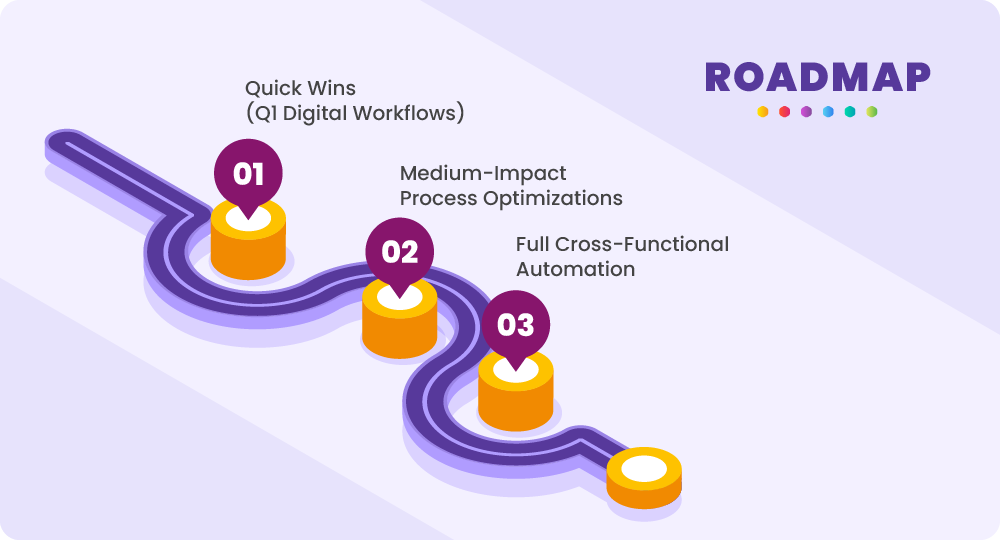
Phase 1: Quick Wins (Q1 Digital Workflows)
Every automation journey should start with simple, high-frequency tasks that drain time but offer immediate ROI once automated. Think employee onboarding, leave approvals, purchase requests, IT service tickets, or customer support routing. These workflows are easy to digitize using no-code tools, giving teams instant relief and boosting adoption early on. This phase builds confidence, wins internal buy-in, and sets the tone for larger automation efforts.
Phase 2: Medium-Impact Process Optimizations
Once the basics are automated, organizations should move toward streamlining more interconnected processes—cross-department approvals, project workflows, procurement cycles, budget requests, compliance reviews, and repetitive sales operations. At this stage, automation shifts from “task-level automation” to “process-level automation,” reducing delays, improving collaboration, and ensuring cleaner data exchange across systems.
Phase 3: Full Cross-Functional Automation
This is where automation becomes a company-wide engine. Multiple departments operate on unified workflows, systems integrate seamlessly, and AI powers predictions, auto-routing, and decision support. By this stage, businesses eliminate manual handoffs, create real-time visibility across operations, and unlock scalable, autonomous workflows that run with minimal human intervention.
Scaling Without Disruption
A modern automation platform should layer on top of existing tools—not replace them. With API-driven integrations and modular deployment, teams can automate gradually while keeping current systems intact. This reduces risk, prevents downtime, and ensures a smooth digital transition.
Building a Culture of Automation
Sustained success depends on mindset. When employees see how no-code tools make their work easier—not harder—they become active automation champions. Training, transparency, and shared wins help create a culture where teams continually seek opportunities to automate, improve, and innovate.
With the right roadmap, businesses can enter 2026 fully automated, future-ready, and confidently ahead of the curve.
" Companies that adopt workflow automation see 3-5x faster project cycles within the first year.” — PwC Operational Efficiency Review "
2026 Readiness Scorecard
Preparing for 2026 isn’t just about adopting new tools—it’s about understanding where your business truly stands today. The 2026 Readiness Scorecard gives leaders a simple, printable framework to evaluate their organization’s digital maturity and identify the gaps holding them back. It’s practical, honest, and designed to spark meaningful conversations across departments.
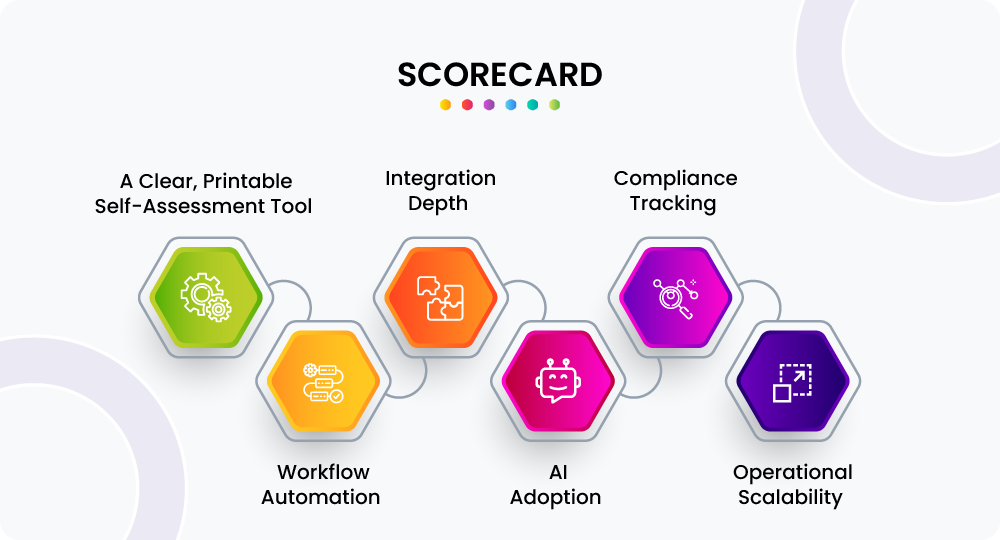
A Clear, Printable Self-Assessment Tool
The 2026 Readiness Scorecard helps businesses evaluate where they stand today and what gaps they must close before entering the new year. It’s a simple, actionable way for leaders to understand their digital maturity across core operational areas.
Workflow Automation
Assess how many of your processes are still manual, inconsistent, or handled through email and spreadsheets. This section highlights whether your daily operations are built for speed—or stuck in time-consuming routines that slow teams down.
Integration Depth
Measure how seamlessly your systems communicate. The scorecard helps you identify data silos, redundant tools, and workflows that still require manual updates. Strong integration depth means information flows effortlessly across your business.
AI Adoption
Evaluate where AI currently fits into your operations. Are you using it for predictions, auto-routing, and intelligent triggers, or is it still in the planning stage? This helps determine your readiness for 2026’s AI-driven expectations.
Compliance Tracking
Check whether your processes are audit-ready, consistent, and aligned with evolving regulations. Good compliance tracking reduces risk and strengthens operational transparency.
Operational Scalability
Determine how prepared your workflows are to handle growth, seasonal spikes, or sudden shifts. High scalability means your business can adapt quickly without compromising performance.
Common Pitfalls — And How to Avoid Them
- Pitfall: Automating the wrong thing. Avoid automating ad-hoc, exception-heavy processes. Start with repeatable tasks.
- Pitfall: No measurement. Baseline metrics before automating. Otherwise you can’t claim wins.
- Pitfall: Insufficient governance. Define who owns automations, how changes are approved, and how rollbacks occur.
- Pitfall: Poor change management. Communicate often. Run short training sessions and provide quick reference guides.
Address these early and your automation program becomes a force multiplier, not a distraction.
Choosing the Right Automation Platform in 2026
Selecting the right automation platform in 2026 isn’t just about upgrading technology—it’s about building a foundation for long-term resilience, scalability, and operational clarity. With markets evolving faster than ever and AI reshaping how teams work, companies need automation platforms that deliver both simplicity and intelligence.
Before choosing a solution, every business should evaluate the core capabilities that define a future-ready automation ecosystem. The must-have features include:
- No-code + AI intelligence: Enables business teams to build workflows instantly while AI provides recommendations, predictions, and smart automation.
- Workflow orchestration at scale: Ensures the platform can manage thousands of processes, users, and dependencies without performance issues.
- Seamless integrations: Connects ERPs, CRMs, HRMS, finance tools, communication apps, and databases so data flows freely across your ecosystem.
- Enterprise-grade security: Includes encryption, compliance controls, SSO, access management, and audit trails to keep data protected.
- Multi-department workflow templates: Gives teams ready-to-use blueprints for HR, Finance, IT, Sales, Operations, and Support so automation starts faster.
- AI-powered insights and auto-routing: Predicts delays, identifies bottlenecks, routes tasks automatically, and provides analytics that drive better decisions.
When companies evaluate automation platforms through this lens, Yoroflow consistently stands out. Its no-code + AI-powered engine helps businesses automate complex processes in hours—not months. Enterprises choose Yoroflow for its agility, intuitive workflow builder, deep integration capabilities, enterprise security, and ability to scale across every department.
In short, Yoroflow doesn’t just automate tasks—it creates a smarter, faster, more connected way of working. It positions teams to thrive in 2026 with speed, confidence, and AI-powered efficiency.
The Yoroflow Advantage: Your 2026 Automation Engine
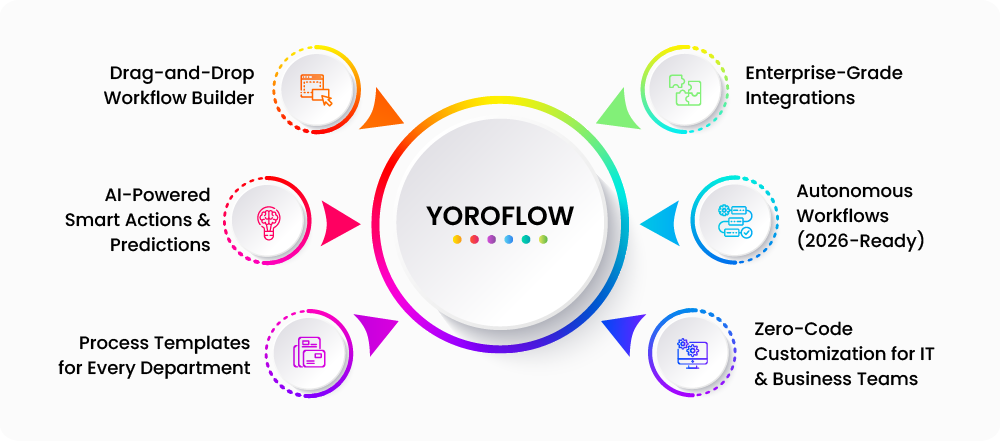
Drag-and-Drop Workflow Builder: Build workflows visually with an intuitive, no-code interface. Teams can automate multi-step tasks in minutes without relying on developers. It’s fast, flexible, and designed for real-world business users who want quick impact.
AI-Powered Smart Actions & Predictions: Yoroflow’s built-in AI analyzes patterns, auto-routes tasks, flags bottlenecks, and recommends next steps. Instead of reacting to delays, your teams get ahead of them—turning AI into an everyday productivity partner.
Process Templates for Every Department: Jump-start automation with ready-made templates for HR onboarding, finance approvals, procurement, IT service requests, customer escalations, and more. These plug-and-play blueprints eliminate long discovery cycles and help you launch workflows faster.
Enterprise-Grade Integrations: Connect your CRM, ERP, HRIS, helpdesk tools, databases, and messaging platforms into one unified system. Data flows seamlessly across your ecosystem, reducing manual effort and eliminating silos.
Autonomous Workflows (2026-Ready): Designed with the future in mind, Yoroflow supports autonomous actions that move work forward without constant human intervention. It’s automation that predicts, adapts, and acts.
Zero-Code Customization for IT & Business Teams: Whether you’re a business user or an IT administrator, Yoroflow gives you the power to design, refine, and scale workflows—no coding required. Teams can customize fields, rules, forms, and logic instantly to match changing business needs.
The Economics of Speed — The ROI of Automating Before Q1
Most businesses think automation ROI is about cost-cutting. In reality, the biggest financial wins come from speed—speed of execution, decision-making, and customer response. Entering 2026 with automated workflows gives companies a measurable performance advantage that compounds throughout the year.
Why Speed Is the New Competitive Currency
- Faster approvals mean faster hiring, purchasing, and project kickoffs—directly impacting quarterly deliverables.
- Automated routing and AI-driven prioritization shrink customer response times, boosting retention and renewal probability.
- Integrated systems reduce operational friction, meaning teams waste fewer hours reconciling data or chasing updates.
Industry benchmarks consistently show that companies with automated workflows outperform manual-first organizations. For instance, productivity gains from workflow automation can exceed 30-40%, while error rates drop dramatically due to standardized processes.
The Hidden Costs of Delaying Automation
Waiting until mid-year to automate creates invisible drag:
- Q1 initiatives stall, causing a ripple effect on revenue, hiring, and customer programs.
- Teams burn energy on administrative tasks instead of strategic execution.
- Manual processes introduce mistakes that compound and require expensive cleanup later.
The math is simple: companies that automate before Q1 get more operational capacity at no extra headcount cost, giving them a stronger start, faster outcomes, and a competitive edge for the next 12 months.
How Yoroflow Maximizes ROI
Yoroflow accelerates ROI with prebuilt templates, AI-powered routing, and no-code deployment—meaning businesses can see value in days, not quarters. With governance, audit trails, and AI insights built in, the platform ensures ROI is not only fast but also sustainable.
Autonomous Workflows and the Agentic Future — What 2026+ Will Look Like
If 2025 was the year of AI-assisted workflows, 2026 will mark the rise of AI-driven, agentic workflows—systems that don’t just automate tasks but plan, act, and optimize on their own. Companies preparing now will be the first to benefit from this next leap in operational capability.
What Agentic Automation Means for Businesses
Agentic AI changes the automation paradigm from:
“Humans trigger tasks” → “AI triggers, coordinates, and resolves multi-step workflows.”
Examples include:
- AI analyzing delays and automatically reallocating work.
- AI initiating procurement tasks when inventory dips.
- AI generating reports, updating systems, or notifying stakeholders without human action.
- AI predicting SLA misses and escalating before issues surface.
This shift turns automation into a “self-moving system,” reducing the need for continuous manual supervision.
Why Businesses Must Prepare Now
Agentic workflows require:
- Clean, connected data
- Standardized processes
- Clear governance and access controls
- A platform that supports autonomous decision-making
Companies still wrestling with siloed systems or manual workflows will struggle to adopt agentic AI later.
How Yoroflow Supports the Agentic Evolution
Yoroflow is already designed with autonomous actions, AI-routing, predictive triggers, and deep integrations—making it a natural foundation for agentic workflows. As 2026 introduces more mature AI capabilities, businesses using Yoroflow won’t need to “upgrade”; they’ll simply activate new layers of intelligence on top of already-standardized, automated workflows.
Conclusion: Your First-Mover Advantage Starts Now
Automation is no longer a technical project-it’s a business growth strategy. Preparing for 2026 means putting systems in place before Q1 so teams can move faster, collaborate better, and make smarter decisions powered by AI.
Organizations that automate now will hit the ground running-with cleaner operations, less friction, and more bandwidth for innovation. Those who wait will spend 2026 catching up.
The choice is simple:
Start early. Start small. Scale fast.
With Yoroflow, you can design, manage, and optimize your workflows effortlessly-turning automation from a goal into a competitive advantage. Your 2026 edge begins with the workflows you automate today.