Introduction
In today’s rapidly changing business environment, organizations face unprecedented challenges that necessitate a reevaluation of their Customer Relationship Management (CRM) strategies. Economic uncertainties, shifting consumer behaviors, and increased competition are just a few factors that can disrupt established business models. As companies strive to adapt, a robust CRM strategy becomes essential not only for survival but also for long-term growth and success.
Effective CRM strategies allow businesses to foster deeper relationships with their customers, understand their needs, and tailor their offerings accordingly. In challenging markets, maintaining customer loyalty is paramount, and leveraging data-driven insights can help organizations anticipate market trends, personalize interactions, and enhance customer experiences.
This whitepaper explores the key elements of successful CRM strategies that empower organizations to navigate turbulent markets. It will delve into best practices for integrating CRM tools, utilizing data analytics, and adopting customer-centric approaches that drive engagement and retention. By implementing these strategies, businesses can not only withstand market challenges but also position themselves for sustainable growth, ensuring they remain competitive in an increasingly dynamic landscape. Ultimately, a well-crafted CRM strategy serves as a critical lifeline for organizations seeking to thrive amidst uncertainty.
What is CRM?
Economic downturns and market disruptions present unique challenges for businesses of all sizes. Companies must adapt quickly to changing consumer behaviors, increased competition, and resource constraints. CRM systems serve as invaluable assets, offering a comprehensive view of customer interactions and preferences, enabling organizations to optimize their strategies for retention, acquisition, and growth.
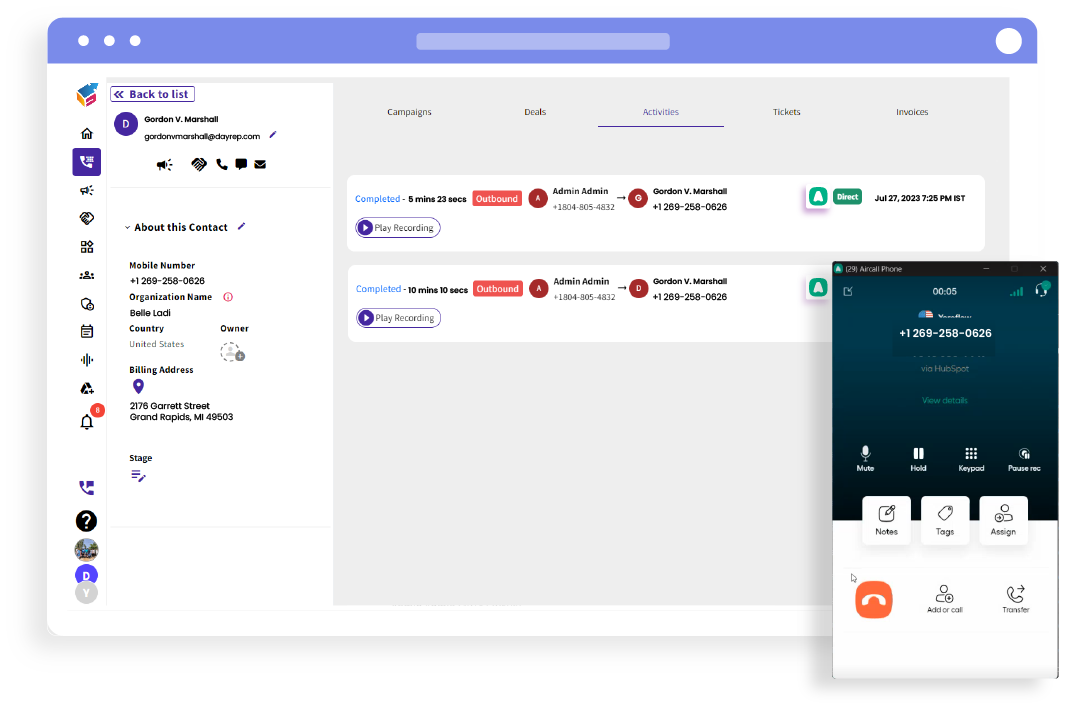
YoroCRM is designed to help businesses effectively manage their customer interactions, streamline operations, and enhance overall productivity. Here are some key features and benefits of YoroCRM.
Key features of CRM software
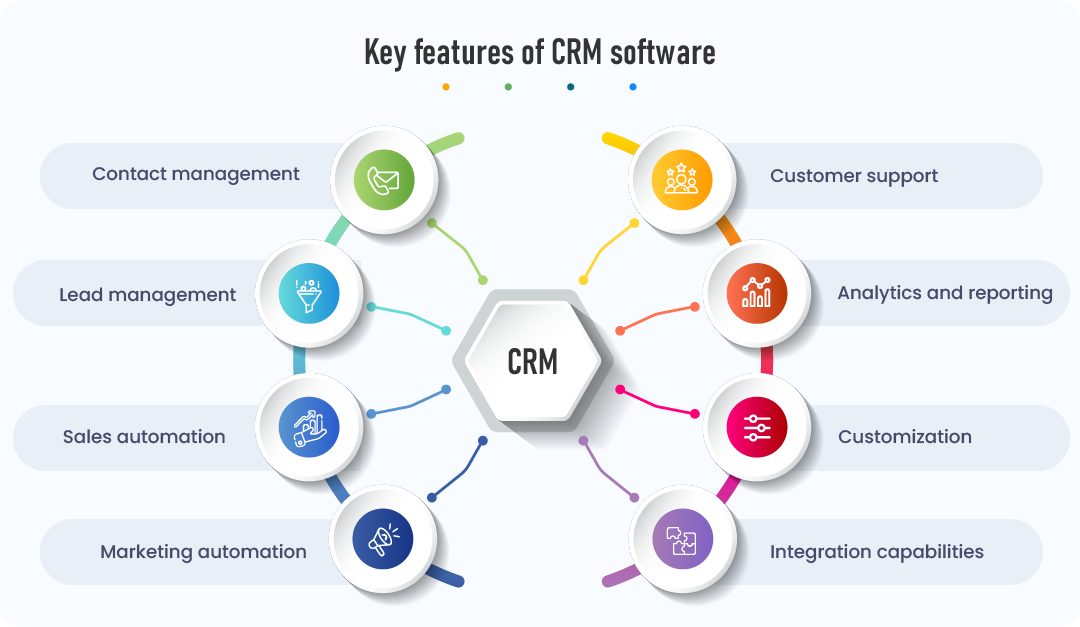
1. Contact management
Contact management involves systematically organizing and storing customer information, including essential contact details, communication history, and individual preferences. This centralized approach not only facilitates easy access to data but also enhances the ability to manage customer relationships effectively. By maintaining accurate and up-to-date records, businesses can improve communication, personalize interactions, and ultimately foster stronger customer loyalty.
2. Lead management
Lead management involves monitoring and nurturing potential customers throughout the sales pipeline, from initial contact to conversion. By systematically tracking leads, sales teams can prioritize follow-ups based on engagement and readiness to buy. This strategic approach enhances the efficiency of sales processes, ultimately increasing conversion rates and driving revenue growth.
3. Sales automation
Sales automation streamlines repetitive tasks, including sending follow-up emails, scheduling meetings, and updating records, freeing sales teams to concentrate on relationship-building and strategic initiatives. By reducing administrative burdens, automation enhances productivity, ensures timely communications, and allows sales professionals to engage more meaningfully with prospects and customers, ultimately driving sales success.
4. Marketing automation
Marketing automation streamlines and enhances campaigns by automating tasks such as email marketing, social media integration, and targeted outreach. This allows businesses to efficiently engage customers with personalized content, track interactions, and nurture leads throughout the customer journey. By automating these processes, companies can improve engagement, increase conversions, and optimize marketing efforts.
5. Customer support
Customer support tools help businesses efficiently manage inquiries, complaints, and support tickets, ensuring timely and accurate responses. By centralizing communication and tracking issues, these tools improve problem resolution, boost customer satisfaction, and foster loyalty. Effective customer support enhances the overall experience, strengthens relationships, and helps retain long-term customers.
6. Analytics and reporting
Analytics and reporting tools provide businesses with in-depth insights into key metrics such as sales performance, customer behavior, and marketing campaign effectiveness. By analyzing this data, companies can identify trends, optimize strategies, and make informed, data-driven decisions. This leads to improved efficiency, better targeting, and enhanced overall business performance.
7. Customization
Customization enables businesses to adapt their CRM systems to meet unique requirements by creating custom fields, workflows, and dashboards. This flexibility ensures that the CRM aligns with specific operational processes, enhances user experience, and supports personalized reporting. By tailoring the system, businesses can optimize efficiency and improve overall performance.
8. Integration capabilities
Integration capabilities allow CRM systems to seamlessly connect with other business tools, including email marketing services, project management software, and accounting systems. This unified approach streamlines operations, enhances data flow, and reduces manual data entry. By integrating systems, businesses can improve efficiency, ensure consistency, and create a more cohesive operational environment.
Benefits of CRM system
Improved customer relationships:
A CRM system, like YoroCRM, offers numerous benefits that help businesses strengthen customer relationships, improve operational efficiency, and drive growth. One of the primary advantages is improved customer relationships. By centralizing all customer data—such as contact information, interaction history, and preferences—YoroCRM enables businesses to gain a comprehensive understanding of their customers. This deep insight allows for personalized interactions, fostering stronger relationships, enhancing customer satisfaction, and increasing loyalty.
Increased efficiency:
Increased efficiency is achieved through the automation of routine tasks, such as data entry, follow-ups, and scheduling. By minimizing manual workloads, teams can redirect their efforts toward strategic activities that drive growth and innovation. This shift not only enhances productivity but also empowers employees to maximize their potential and deliver greater value.
Enhanced collaboration:
Enhanced collaboration is facilitated by CRM platforms that enable teams to easily share information and insights in real-time. By centralizing communication and project data, team members can stay aligned, reduce misunderstandings, and streamline workflows. This collaborative environment fosters innovation and efficiency, ultimately leading to improved project outcomes and stronger relationships.
Data-driven decisions:
Data-driven decisions empower businesses to leverage analytics and reporting tools that reveal key trends and insights. By analyzing customer behavior, sales patterns, and market dynamics, organizations can make informed choices that enhance strategy and operations. This evidence-based approach not only drives growth but also fosters agility in a competitive landscape.
Why CRM in challenging markets?
Customer retention:
In times of uncertainty, retaining existing customers is more cost-effective than acquiring new ones. CRM systems help identify at-risk customers and enable personalized engagement strategies to strengthen relationships.
Streamlined Operations:
CRM systems automate various processes such as lead management, follow-ups, and customer support. This efficiency helps organizations respond quickly to market changes and customer inquiries, ultimately improving service delivery.
Data-driven insights:
CRM platforms aggregate vast amounts of customer data, providing insights into buying patterns and preferences. These insights inform targeted marketing campaigns and sales strategies, maximizing resource allocation.
Agility and responsiveness:
A well-implemented CRM system enhances an organization’s agility, allowing it to respond swiftly to changing market conditions. Automation of processes and real-time reporting can streamline operations, facilitating quicker decision-making.
Personalized Marketing Efforts:
A CRM centralizes customer information, making it accessible to all relevant teams. This enhanced collaboration ensures that everyone is aligned in their approach to customer engagement and can work together to navigate market challenges.
Improved Collaboration:
A CRM allows businesses to segment their customer base and tailor marketing campaigns effectively. Personalized approaches increase engagement and conversion rates, which are critical for growth in challenging markets.
Scalability:
As businesses adapt to shifting market dynamics, a CRM can scale with them. Whether expanding product lines or entering new markets, a CRM provides the tools necessary to manage growth effectively.
Key CRM strategies for navigating tough times
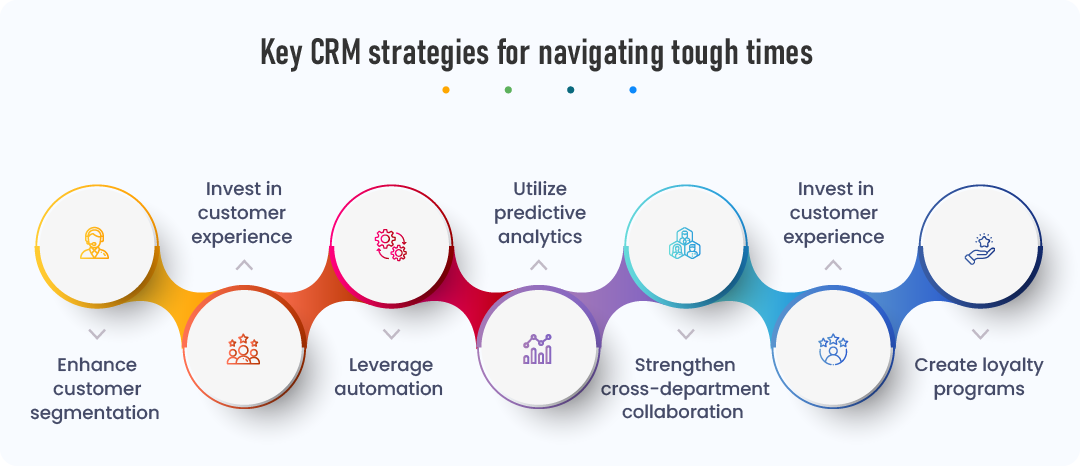
1. Enhance customer segmentation
Utilize CRM data to segment customers based on behavior, preferences, and purchase history. This segmentation enables tailored marketing efforts, ensuring that messaging resonates with specific audience segments
2. Invest in customer experience
Focus on delivering exceptional customer experiences through personalized communication and service. Use CRM tools to track interactions, gather feedback, and implement changes that address customer needs effectively.
3. Leverage automation
Implement automated workflows within the CRM system to streamline repetitive tasks, such as follow-ups and reporting. Automation enhances productivity, allowing teams to focus on high-impact activities that drive revenue.
4. Utilize predictive analytics
Employ predictive analytics features within your CRM to forecast sales trends, identify potential upsell opportunities, and improve inventory management. This foresight enables proactive decision-making and resource planning.
5. Strengthen cross-department collaboration
Foster collaboration between sales, marketing, and customer service teams by centralizing customer data in the CRM. A unified view of customer interactions enhances communication and ensures consistent messaging across departments.
6. Create loyalty programs
Develop customer loyalty programs integrated into your CRM system to reward repeat purchases and encourage referrals. These programs can significantly enhance customer retention and advocacy
7. Embrace remote collaboration
As remote work becomes more prevalent, ensure that your CRM platform supports remote collaboration among teams. Cloud-based CRM systems facilitate real-time access to customer data and communication tools, enabling seamless teamwork
Best Practices for CRM Implementation
Tips for Selecting the Right CRM Solution
Choosing the right CRM is essential for effectiveness. Assess your business needs, team size, and required functionalities like sales automation or customer support. Evaluate platforms through user reviews and demos, prioritizing customization and scalability. Lastly, consider vendor support and training resources for successful implementation and long-term use.
Ensuring User Adoption and Training
User adoption is crucial for CRM success. Involve your team in the selection process to gain buy-in and provide tailored training for different roles, covering both basic and advanced features. Foster a supportive culture encouraging feedback and tips, designate "CRM champions" for assistance, and regularly share success stories to highlight the CRM's value.
Continuous Monitoring and Optimization of CRM Strategies
Implementing a CRM is an ongoing process requiring continuous monitoring and optimization. Regularly assess strategies through key performance indicators (KPIs) like customer satisfaction and sales growth. Gather user feedback, utilize analytics to track trends, and adjust processes based on insights. Embracing continuous improvement enhances CRM impact, fostering better customer relationships and increasing efficiency.
Future Trends in CRM
Predictions for CRM Evolution in Response to Changing Market Conditions
The landscape of customer relationship management (CRM) is continuously evolving, driven by shifting market dynamics and changing consumer expectations. One significant trend is the increasing emphasis on customer-centricity. As consumers demand more personalized experiences, CRMs will evolve to offer enhanced segmentation and targeting capabilities, allowing businesses to tailor their interactions more effectively. Furthermore, the rise of remote and hybrid work environments will push organizations to adopt cloud-based CRM solutions that facilitate collaboration across distributed teams.
Additionally, the integration of omnichannel strategies will become paramount. Customers expect seamless interactions across various channels, whether through social media, email, or direct communication. Future CRMs will need to provide a unified view of customer interactions, enabling businesses to engage with customers consistently regardless of the platform. As market conditions fluctuate, agility will be critical; thus, CRMs will increasingly incorporate real-time analytics and insights to support rapid decision-making and responsive strategies.
The Impact of Emerging Technologies on CRM Strategies
Emerging technologies, particularly artificial intelligence (AI) and machine learning, are poised to revolutionize CRM strategies. AI-driven tools will enhance data analysis capabilities, allowing businesses to glean deeper insights from customer data. Predictive analytics will empower organizations to anticipate customer needs and behaviors, enabling proactive engagement strategies that enhance customer satisfaction and retention.
Machine learning algorithms will automate routine tasks such as data entry, lead scoring, and customer segmentation, freeing up sales and marketing teams to focus on more strategic initiatives. Chatbots and virtual assistants will also play a significant role in improving customer support, providing instant responses to inquiries, and guiding customers through their journeys.
Moreover, the integration of CRM systems with the Internet of Things (IoT) will enable businesses to gather real-time data from connected devices, enhancing their understanding of customer behaviors and preferences. As a result, future CRM systems will not only focus on managing relationships but will also leverage advanced technologies to create more personalized, efficient, and effective customer interactions. This evolution will ultimately lead to a more holistic approach to customer relationship management, driving growth and enhancing brand loyalty.
Maximize business performance in challenging markets with YoroCRM
In challenging markets, effective CRM strategies are essential for organizations looking to not only survive but thrive. By prioritizing customer retention, leveraging data-driven insights, and embracing automation, businesses can navigate adversity with confidence. The adaptability and resilience fostered through CRM implementation will position organizations for long-term success, regardless of external market conditions.
To maximize these benefits, consider YoroCRM as your trusted partner. With its powerful features and user-friendly interface, YoroCRM empowers businesses to enhance customer relationships, streamline operations, and drive growth even in the toughest times.
Yoroflow’s AI-Powered No-Code/Low-Code Platform
Yoroflow delivers AI-powered solutions designed to enhance productivity and streamline workflow processes. Renowned for its advanced features, Yoroflow boosts team efficiency by automating repetitive tasks, utilizing intelligent data insights, and simplifying complex workflows. It offers a comprehensive platform that supports task management, project management, document processing, ticketing systems, customer relationship management, and seamless integrations. By focusing on driving efficiency and fostering collaboration, Yoroflow empowers businesses to achieve more in less time with its no-code/low-code technology.