Executive Summary
By 2025, businesses will embrace advanced technologies like hyper-automation, AI, and no-code/low-code platforms to innovate and stay competitive. Key trends include automating workflows, AI-driven decision-making, and integrating digital tools for sustainability. Companies face challenges such as system integration and workforce adaptation but must act quickly to leverage these trends for growth.
Yoroflow is a no-code platform designed to streamline operations and drive digital transformation. It automates tasks, enhances collaboration, and provides AI-powered insights, all while being user-friendly and scalable. Yoroflow empowers businesses of all sizes to improve efficiency, reduce costs, and stay ahead in a rapidly evolving digital landscape.
Let's see the glimpse below,
- Introduction
- The State of Digital Transformation Today
- Challenges in Digital Transformation
- Strategies to Overcome These Challenges
- The Power of Yoroflow in Enabling Digital Transformation
- How Yoroflow Supports Businesses in Their Digital Transformation Journey
- Industry-Specific Applications of Yoroflow
- A Step-by-Step Guide to Implementing Yoroflow for Digital Transformation
- The Future of Digital Transformation in 2025
- What Businesses Should Expect by 2025
- Embrace Yoroflow for a Future-Ready Business
Introduction
Digital transformation is becoming a critical priority for businesses globally. According to Kissflow (2024), 74% of organizations rank digital transformation as essential for staying competitive. Precedence Research (2024) predicts the market for digital transformation will grow at a remarkable 22.5% CAGR, reaching $3.95 trillion by 2030.
Automation is central to this shift, driving significant benefits. Companies adopting workflow automation report cost savings of up to 30%, highlighting the financial impact of embracing these technologies (Precedence Research, 2024). Additionally, a Deloitte report states that 41% of executives have seen improved growth in sales and marketing performance through digital initiatives.
Yoroflow stands out as a critical enabler in this space, providing advanced workflow automation, AI-driven insights, and real-time data analytics. With its scalable and integration-ready solutions, Yoroflow empowers businesses to reduce costs, enhance operational efficiency, and make informed decisions, ensuring they thrive in the digital age.
The State of Digital Transformation Today
Digital transformation is no longer a futuristic concept—it's a present-day reality reshaping businesses across the globe. Companies of all sizes are leveraging new technologies to stay competitive, improve operations, and create better customer experiences.
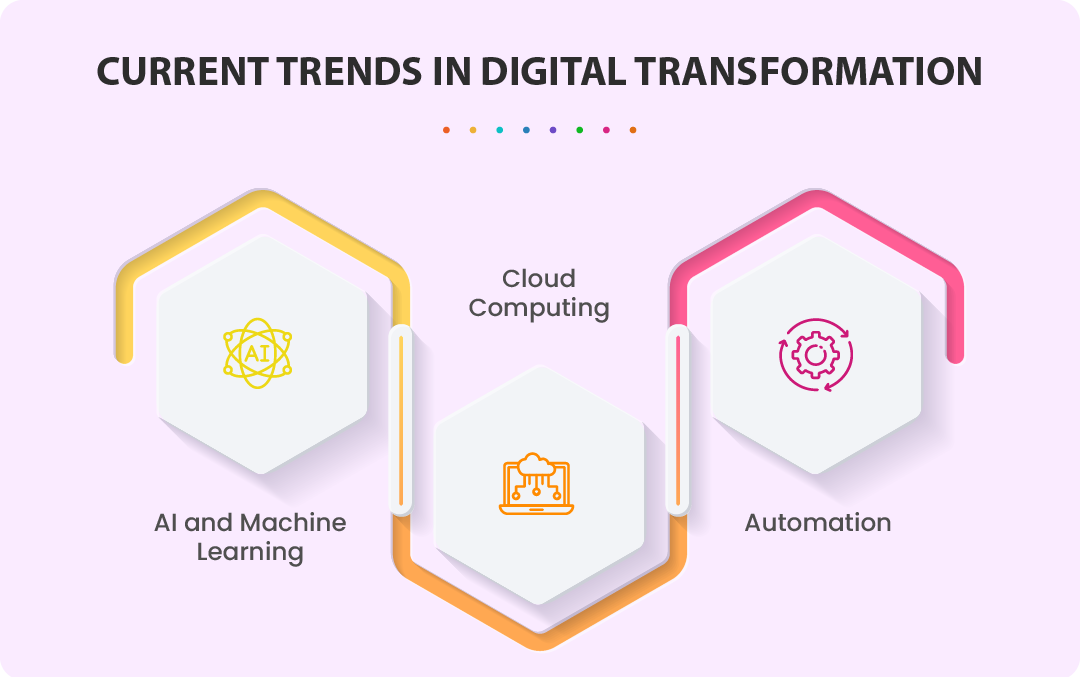
Key trends driving this transformation include:
- AI and Machine Learning: Businesses are increasingly integrating Artificial Intelligence (AI) and Machine Learning (ML) into their operations. AI is used for automating processes, enhancing decision-making through predictive analytics, and offering personalized experiences. Machine learning algorithms are constantly evolving to improve accuracy in areas such as customer behavior analysis, demand forecasting, and risk management.
- Cloud Computing: Cloud technology has become the backbone of digital transformation. It offers businesses scalability, flexibility, and cost efficiency. Cloud-based platforms allow companies to access data and applications remotely, enabling real-time collaboration and faster decision-making. Additionally, with the cloud, companies can expand their digital infrastructure without the burden of maintaining costly on-premises hardware.
- Automation: The need for business efficiency and process optimization has propelled the adoption of automation technologies. From workflow automation to robotic process automation (RPA), automation is being used to eliminate manual tasks, increase operational efficiency, and reduce errors. Businesses can automate repetitive, time-consuming tasks, allowing employees to focus on strategic initiatives.
Challenges in Digital Transformation
While digital transformation offers numerous benefits, organizations face several challenges when adopting and implementing new technologies:
- Legacy Systems: Many businesses are still relying on outdated legacy systems that were not designed for modern digital demands. These systems can be difficult and costly to integrate with newer technologies. Legacy systems often lack the flexibility to scale with the business, making it hard to keep up with the pace of digital transformation. Replacing or upgrading these systems can be a time-consuming and expensive process.
- Employee Resistance: One of the biggest hurdles in digital transformation is resistance from employees. Many workers are hesitant to adopt new technologies due to fear of change or lack of understanding about how these tools will improve their work. There may be concerns about job displacement or the difficulty of learning new systems. Overcoming this resistance requires a cultural shift toward embracing innovation and providing the necessary training and support.
- Resource Allocation: Digital transformation requires substantial investment in technology, people, and processes. Small and medium-sized businesses, in particular, may struggle to allocate the necessary resources to drive transformation. This includes not only financial resources but also human resources for implementation, change management, and ongoing support. Without proper planning and investment, digital transformation efforts can fall short.
Strategies to Overcome These Challenges
To successfully navigate the challenges of digital transformation, businesses can adopt the following strategies:
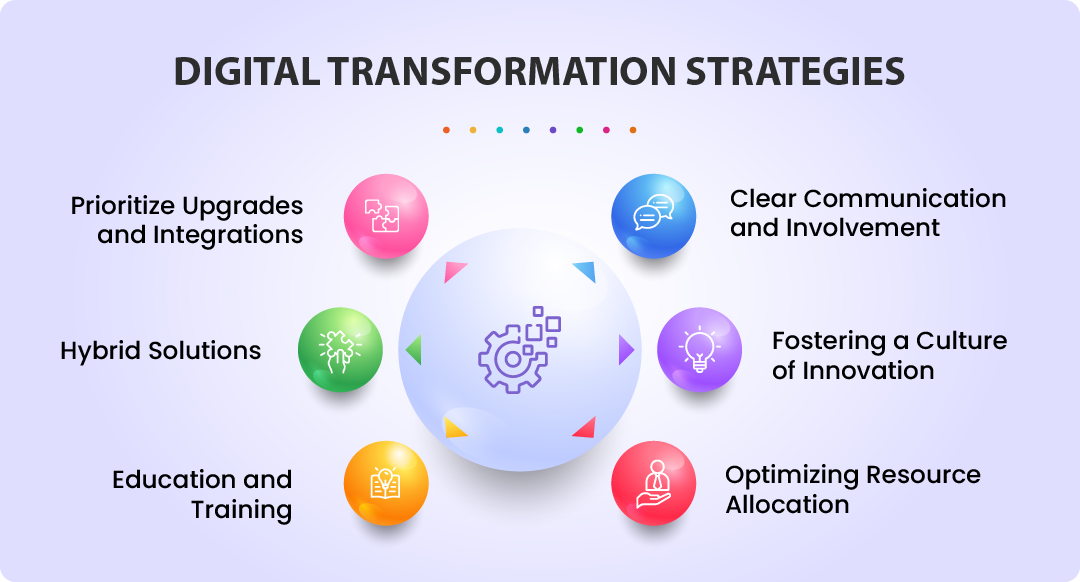
- Prioritize Upgrades and Integrations: Businesses should assess their current systems and identify areas where they can upgrade or integrate with new technologies. Gradually phasing out legacy systems and replacing them with cloud-based solutions or newer software can minimize disruptions.
- Hybrid Solutions: For some businesses, adopting hybrid systems that combine both old and new technologies might be a practical solution. These hybrid models can allow for smooth transitions while maintaining existing functionalities.
- Education and Training: Offering employees the necessary education and hands-on training can reduce uncertainty and build confidence in new technologies. Workshops, webinars, and in-depth training sessions can help employees understand how automation, AI, and other tools will enhance their productivity.
- Clear Communication and Involvement: Communicate the benefits of digital transformation openly with employees. Engaging them in the decision-making process and explaining how these tools will improve their work-life can help mitigate resistance.
- Fostering a Culture of Innovation: Encourage a growth mindset within the company. A company culture that embraces change and innovation will make it easier to adopt new technologies and improve overall engagement.
- Optimizing Resource Allocation: Cloud solutions reduce upfront hardware costs, freeing up resources for digital transformation tools like automation and AI. By focusing on ROI and selecting tools that align with business goals, companies maximize investments. A phased implementation approach ensures gradual, manageable changes, helping allocate resources effectively and minimizing employee overwhelm.
The Power of Yoroflow in Enabling Digital Transformation
Overview of Yoroflow and Its Capabilities
Yoroflow is a comprehensive automation platform that enables businesses to streamline operations, improve workflows, and embrace digital transformation with ease. It helps organizations automate repetitive tasks, integrate various systems, and leverage data to make informed decisions. By providing a centralized solution for workflow management, Yoroflow empowers teams to focus on higher-value tasks, increasing overall productivity and efficiency. Whether in a small business or a large enterprise, Yoroflow’s flexible and scalable nature adapts to any organization's unique needs, driving innovation and continuous improvement.
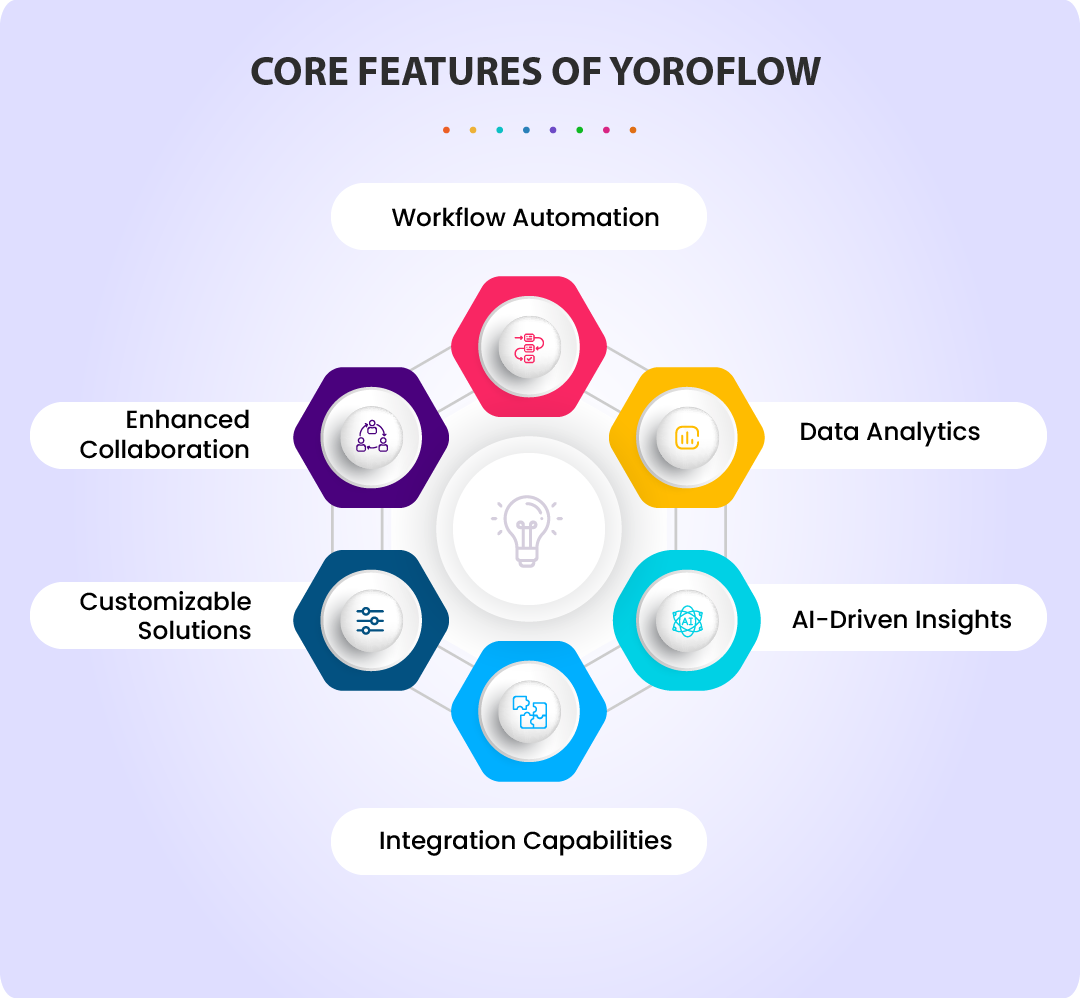
Core Features of Yoroflow
Workflow Automation
Yoroflow's workflow automation feature allows businesses to automate routine processes such as approvals, notifications, and data entry. It helps reduce manual effort, ensuring that tasks are completed faster and more accurately. This automation not only saves time but also minimizes human errors, leading to smoother operations across departments.
Data Analytics
With built-in data analytics, Yoroflow gives businesses access to actionable insights from their operations. It aggregates data from different sources, processes it, and presents it in clear, easy-to-understand reports and dashboards. These insights enable organizations to identify inefficiencies, track key performance metrics, and make data-driven decisions for continuous improvement.
AI-Driven Insights
Leveraging artificial intelligence, Yoroflow can analyze large datasets to identify trends, patterns, and areas for optimization. These AI-driven insights help businesses predict outcomes, make smarter decisions, and optimize processes. For example, it can suggest improvements in resource allocation, workflow adjustments, and risk management, enhancing decision-making across the organization.
Integration Capabilities
One of Yoroflow’s strengths is its seamless integration with a wide range of third-party tools, including CRMs, ERPs, communication platforms, and cloud storage solutions. This ensures that businesses can continue using their existing systems while benefiting from Yoroflow's automation capabilities. Integration allows data to flow freely between tools, improving communication and collaboration across departments and functions.
Customizable Solutions
Yoroflow offers customizable solutions that align with unique business needs. Its drag-and-drop workflow designer, custom templates, scalability, and seamless integration with existing tools empower businesses to adapt workflows easily. With advanced rule-based automation, companies can optimize efficiency, enhance task management, and support long-term transformation goals.
Enhanced Collaboration
Yoroflow enhances collaboration by breaking silos and promoting real-time communication. Teams can track progress, assign tasks, and collaborate on documents seamlessly. Cross-department visibility and integrated approvals streamline workflows, reduce bottlenecks, and improve efficiency, ensuring faster decision-making and higher productivity across the organization.
How Yoroflow Supports Businesses in Their Digital Transformation Journey
Yoroflow is central to enabling businesses to transition from traditional manual processes to automated, data-driven workflows. It reduces the time and effort required to complete tasks, allowing teams to focus on innovation and strategic initiatives. Additionally, by providing the flexibility to integrate with existing systems and the ability to scale as business needs grow, Yoroflow ensures that companies are future-proofed and ready to meet the challenges of the evolving digital landscape. Through automation and AI, Yoroflow helps businesses unlock efficiencies and enhance overall business performance, which is key to successful digital transformation.
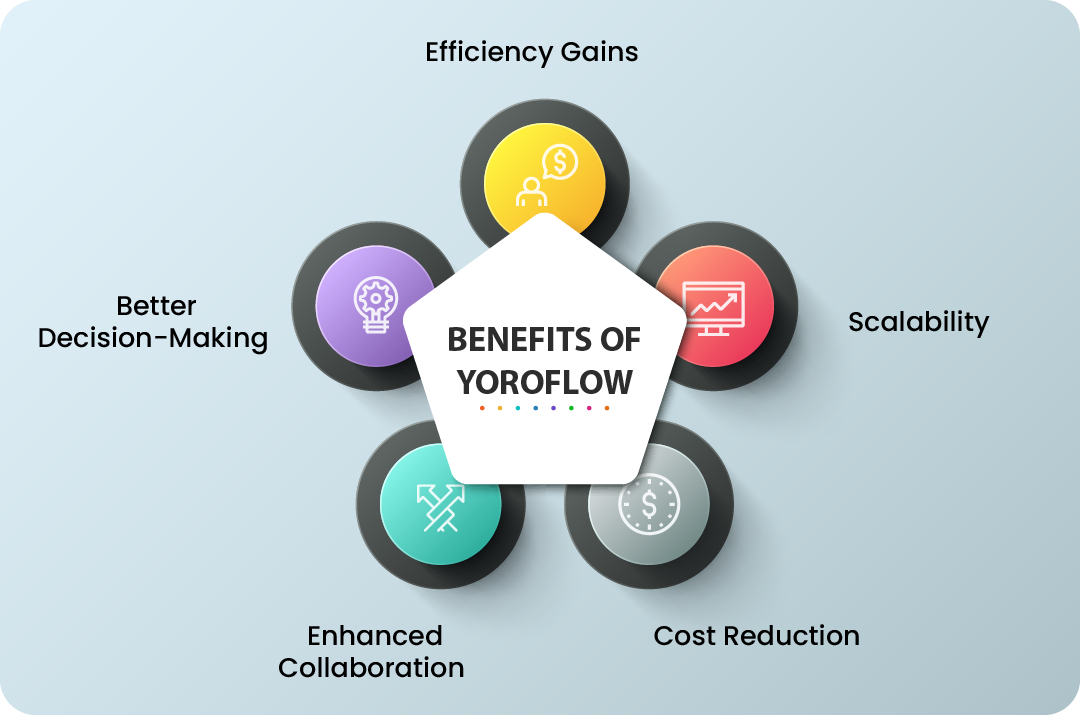
Yoroflow provides several benefits that support businesses in their digital transformation journey. Here are some key benefits:
1. Efficiency Gains
Yoroflow automates routine processes, significantly improving operational efficiency. Tasks that would normally require manual input, such as data entry or approval workflows, are automated, leading to faster completion times. This reduction in manual effort also decreases human errors, which enhances data accuracy and consistency, contributing to smoother workflows and fewer disruptions.
2. Scalability
As businesses grow, their processes become more complex. Yoroflow’s scalable architecture allows organizations to easily expand automation efforts without needing significant resources or manual intervention. The platform can handle increased volumes of tasks and users without adding operational overhead, making it ideal for businesses looking to grow sustainably.
3. Cost Reduction
By automating repetitive tasks, businesses can reduce the need for manual labor, leading to lower labor costs. Additionally, Yoroflow eliminates inefficiencies in processes, reduces error rates, and minimizes operational bottlenecks, all of which contribute to cost savings. Moreover, the platform's predictive analytics help identify areas where further cost-cutting measures can be implemented.
4. Enhanced Collaboration
Yoroflow integrates different departments and tools, breaking down silos and enabling seamless communication. For example, workflows can be set up to automatically notify different teams when specific actions are completed or tasks are updated, ensuring that all departments remain aligned and can collaborate effectively. This creates a more cohesive, cooperative working environment that drives productivity.
5. Better Decision-Making
With real-time data and AI-driven insights, businesses can make more informed decisions. Yoroflow’s data analytics feature provides actionable insights on key metrics, helping organizations identify performance gaps, customer trends, and areas for improvement. With this data at their fingertips, decision-makers can act quickly, mitigate risks, and seize opportunities before they pass.
Industry-Specific Applications of Yoroflow
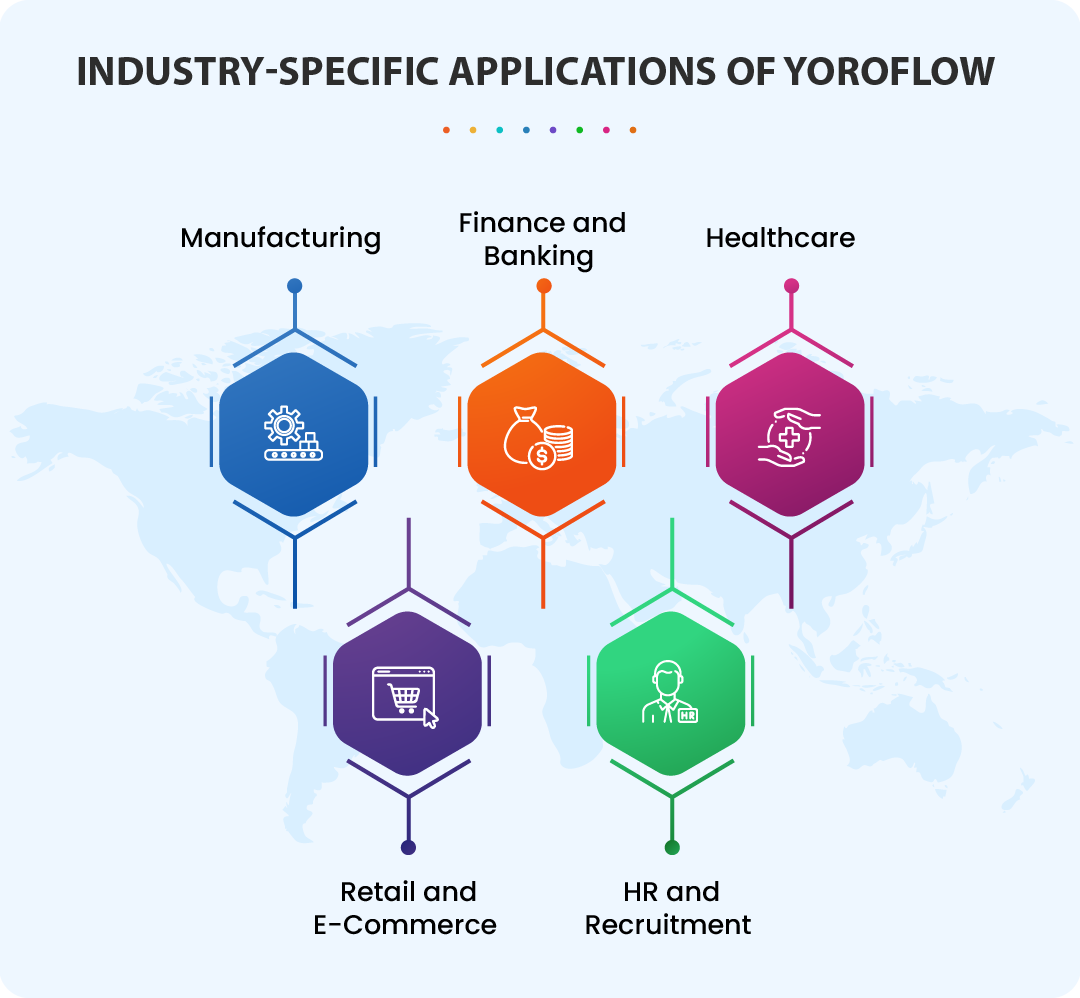
1. Manufacturing
In manufacturing, Yoroflow can automate the monitoring of inventory levels, production schedules, and supplier orders, ensuring that the supply chain operates efficiently. Automated workflows help reduce production downtime by ensuring that every stage of the process is completed on time. By integrating real-time data from various production units, Yoroflow can also improve forecasting and resource allocation.
2. Finance and Banking
In the finance sector, Yoroflow automates processes like risk assessments, compliance checks, and procurement management. Automated workflows ensure compliance with industry regulations and reduce the risk of errors. Additionally, the platform helps streamline loan approvals, document management, and reporting, providing enhanced efficiency and accuracy.
3. Healthcare
Yoroflow streamlines patient management systems by automating appointment scheduling, patient data entry, and follow-up reminders. It also helps in automating administrative tasks such as billing, insurance claims, and compliance reporting. These efficiencies reduce the administrative burden on healthcare professionals, allowing them to focus more on patient care.
4. Retail and E-Commerce
Yoroflow helps retail and e-commerce businesses automate customer support, inventory management, and order fulfillment processes. For example, workflows can automatically update inventory levels when orders are placed, trigger restock orders or send customer notifications about shipping status. This improves both customer experience and operational efficiency.
5. HR and Recruitment
In HR, Yoroflow automates the recruitment process, from job posting to candidate interviews and onboarding. Employee performance management, payroll processing, and benefits administration are also streamlined through automation. This reduces the administrative burden on HR teams, improves employee engagement, and ensures that talent management processes are smooth and efficient.
A Step-by-Step Guide to Implementing Yoroflow for Digital Transformation
Successfully integrating Yoroflow into your organization involves a systematic approach to ensure seamless adoption and maximum impact. Here’s a comprehensive guide:
Assessing Your Current Workflow and Processes
To start, analyze existing workflows to identify inefficiencies, repetitive tasks, and bottlenecks in areas like approval cycles, data entry, or communication gaps. Automation can simplify processes such as invoice approvals or project management, saving time and reducing errors.
Next, map out key workflows to understand their dependencies, inputs, and outputs. Visualization tools like flowcharts make it easier to spot steps suitable for automation. Prioritize high-impact areas, such as procurement and HR onboarding, where automation can yield immediate and measurable benefits.
Setting Up Yoroflow
Yoroflow integrates seamlessly with major platforms such as ERP (e.g., SAP, Oracle) and CRM (e.g., Salesforce), ensuring that workflows remain connected to existing systems and avoiding siloed operations.
Additionally, Yoroflow's intuitive drag-and-drop workflow builder allows you to create customized workflows tailored to your business needs. You can choose from pre-built templates or design specific processes, such as compliance tracking or customer service escalation, to match your organization's requirements. This flexibility makes it easy to adapt Yoroflow to your unique operational goals.
Training and Adoption
To ensure successful team onboarding with Yoroflow, organize role-specific training sessions that focus on key functions like task assignments for project managers or reporting dashboards for leadership. Offer user-friendly guides and interactive demos for hands-on learning to help employees quickly adapt.
Encourage a culture of innovation by allowing teams to experiment with automating everyday tasks. Appoint internal champions or power users to provide ongoing support, share success stories, and offer guidance. Clear communication about the benefits of automation will help alleviate concerns and foster confidence in the new system.
Measuring Success
To track digital transformation progress, define key performance indicators (KPIs) aligned with your business goals. Important KPIs include:
- Process Efficiency: Measure time saved per workflow.
- Cost Savings: Track reductions in manual labor costs.
- Error Rates: Monitor decreases in human errors post-automation.
- User Adoption: Measure the percentage of employees actively using Yoroflow.
Yoroflow’s real-time analytics provide insights into workflow performance, enabling continuous improvement. Use data to identify areas for enhancement and create feedback loops where employees can suggest workflow refinements, fostering a culture of collaboration and ongoing optimization.
The Future of Digital Transformation in 2025
As businesses continue to adapt to a rapidly changing technological landscape, digital transformation is no longer just a buzzword—it is a necessity for staying competitive. Looking beyond 2025, the future of digital transformation will be driven by advancements in artificial intelligence (AI), machine learning (ML), automation, and data analytics. These technologies will continue to reshape how businesses operate, and companies must evolve in tandem to leverage these advancements effectively.
Predictions for Technology Advancements Beyond 2025
1. Hyper-Automation and AI Integration:
By 2025 and beyond, automation will no longer be limited to simple tasks. Hyper-automation, powered by AI and ML, will enable businesses to automate complex decision-making processes, predictive analytics, and data-driven insights. Businesses will adopt fully integrated systems that use AI to streamline operations across departments, improving efficiency, reducing errors, and enabling smarter decision-making.
2. Advanced Cognitive Automation:
The evolution of cognitive automation will enable machines to mimic human thought processes and perform more sophisticated tasks, such as interpreting complex data, understanding natural language, and even executing higher-level decision-making functions. This will significantly enhance areas like customer service, procurement, and operations, as automation moves beyond routine tasks to cognitive, knowledge-based work.
3. Edge Computing and Real-Time Data Processing:
As IoT devices and sensors proliferate, edge computing will become essential for processing data closer to where it’s generated. This will reduce latency and improve real-time decision-making capabilities. Businesses will adopt workflows powered by edge computing to ensure faster processing and more responsive operations, especially in industries like manufacturing, logistics, and healthcare.
4. Quantum Computing:
Though still in its early stages, quantum computing will eventually revolutionize industries by solving complex problems faster than traditional computers can. While this technology won’t be mainstream by 2025, businesses must prepare to adapt as it matures, particularly in areas like encryption, data security, and logistics optimization.
5. Blockchain and Digital Trust:
The growth of blockchain will impact digital transformation by enhancing data security, transparency, and traceability. As blockchain technology becomes more mature, it will play an integral role in supply chains, HR processes, and financial systems, ensuring more secure and transparent business operations.
What Businesses Should Expect by 2025
Increasing Reliance on Automation and AI
Automation will dominate repetitive and resource-intensive tasks, freeing human talent to focus on strategic initiatives. Gartner predicts that by 2025, 75% of enterprises will shift from piloting AI to operationalizing it, enhancing efficiency and scalability.
Demand for Integrated, Adaptive Tools
The rise of remote work and globalized teams will push businesses to adopt tools that unify workflows and adapt to diverse business needs. Platforms that combine automation, analytics, and collaboration will be essential for managing increasingly complex operations.
The Evolution of Customer Expectations
Consumers will demand seamless, personalized, and proactive services. AI-driven chatbots, real-time support, and predictive product recommendations will become standard. Companies that prioritize customer-centric digital strategies will stand out, as 86% of buyers are willing to pay more for a superior customer experience (PWC).
Embrace Yoroflow for a Future-Ready Business
In today’s fast-paced, digitally-driven business landscape, digital transformation is no longer optional—it’s essential for survival and success. Companies that fail to adapt to technological advancements risk falling behind, while those that embrace change can unlock new levels of efficiency, innovation, and growth. Digital transformation allows businesses to streamline operations, enhance collaboration, optimize decision-making, and provide superior customer experiences, all while staying competitive in an increasingly global market.
Yoroflow is a key enabler in digital transformation, offering customizable workflow automation solutions that optimize processes, enhance collaboration, and scale operations. With features like drag-and-drop design, real-time collaboration, and AI-powered automation, it helps businesses streamline workflows and stay ahead in a rapidly evolving market. As businesses grow, Yoroflow’s scalability ensures smooth adaptation without disruption, supporting long-term success.
The future of business is digital, and the time to embrace transformation is now. Yoroflow is not just a tool; it’s a strategic partner that will help guide your organization through the complexities of digital transformation. By automating processes, enhancing collaboration, and leveraging AI to optimize workflows, you’ll be equipped to meet the demands of tomorrow’s business environment, today.
Take the first step toward a future-ready business—embrace Yoroflow to streamline your workflows, empower your teams, and unlock new levels of efficiency and productivity. Start your digital transformation journey with Yoroflow now and ensure that your business is ready for the challenges and opportunities of the future.